
The constellation known as Sagittarius is a centaur. Do not confuse it with Centaurus. We have two centaurs in the sky and this one wants to be associated with the fine sport of archery. So ignore the legs and focus on the bow. The name associated with these stars goes way back. It’s one we […]
Continue reading...

The summer sky is dominated by a constellation named Scorpius, the scorpion. It has lots of bright stars in a long swooping curved shape like a fish hook. The brightest star in the line-up is a huge red one smack dab in the heart of the beast, named Antares. The scorpion is formidable. He’s hard […]
Continue reading...
The southern constellation Sculptor represents a sculptor’s studio/workshop. It is one of fifteen designated to honor random 18th century crap by Abbé Nicolas Louis de Lacaille. When Lacaille got married and his bride said her vows, she probably ended with “…and I’ll be naming our kids and pets.” But hey, it was a simpler time. […]
Continue reading...
There is a small rectangular region in the summer sky known as Scutum, the shield. It represents a typical shield ranging from the Roman legionnaire sort to one that ye olde knight of chivalry might carry along with so much armor he needs a crane to get on a horse. The medieval warriors of Europe […]
Continue reading...
There is a rather unique constellation in the summer sky called Serpens, the serpent. What makes it special is that it is the only constellation that is divided into two parts. That is, the region of sky assigned to it is not contiguous. In between Serpens Caput (the head) and Serpens Cauda (the tail) is […]
Continue reading...
There is a small constellation smack dab on the celestial equator called Sextans. Don’t worry, it’s safe for work, although the sex part might get it snagged by parental filters, I wouldn’t know. It’s part of a group of constellations named in the 17th century in order to fill in some of the holes in […]
Continue reading...
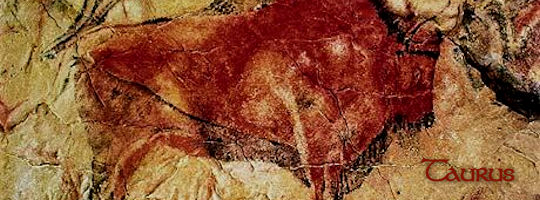
The constellation Taurus is one of the oldest and most famous of the sky-critters. There are indications that folks associated these stars with a bull all the way back to the copper age, which is really just the bronze age before the upgrade. But great starlore doesn’t typically happen all of a sudden because things […]
Continue reading...
Nick Lacaille named a constellation Telescopium in order to honor a specific telescope, the one at the Paris Observatory. But then the heavenly borders got all rearranged and they had to cut off the top of the scope as Nick had drawn it. So as a result they had to use different stars for the […]
Continue reading...
The constellation Triangulum is one of the few examples where the connect-the-dots thing really does resemble the name. I mean, it makes a pretty damn good triangle without resorting to your imagination. Even the ancient Babylonians couldn’t come up with a great name for these stars so their astro-geeks called it “the plow” which was […]
Continue reading...
There’s a barely noticed constellation down under called Triangulum Australe, the southern triangle. Connecting three dots to make a triangle is pretty much the minimum effort for making a star group. The first person to go to all that effort was an Italian named Amerigo Vespucci in the early 1500’s. He’s also the guy that […]
Continue reading...
The southern constellation of Tucana was named after a colorful South American bird in the late sixteenth century by Petrus Plancius. It is small but important. It contains some of our best examples of cosmic real estate, a dwarf galaxy and a globular cluster, both orbiting the Milky Way. Firstly, there’s the Small Magellanic Cloud. […]
Continue reading...
The Greater Bear, Ursa Major, is probably the most significant constellation in the northern sky because it contains the Big Dipper. The Big Dipper is a thing with a thousand names. It’s the most obvious and easiest to recognize of all the star groups. To the British it is the plow. To the Chinese it […]
Continue reading...






 Skywise Unlimited
October 23, 2016
0 Comments